Why 1099 paperwork causes headaches for teams
Collecting vendor information for form preparation often turns into a scavenger hunt. Missing taxpayer IDs, inconsistent addresses, and unclear entity types can stall a submission even when 1099 filing service your accounting process is otherwise solid. When the underlying data is messy, every downstream step—from validation to printing to review—takes longer than expected.
Many organizations also discover that paper-based workflows introduce avoidable errors. Transcription mistakes happen when teams retype numbers, and formatting issues can prevent forms from matching IRS expectations. The result is rework, delayed reporting, and pressure on the same people who are already managing other year-end responsibilities.
A clear problem-solving process for accurate submissions
A reliable workflow starts with data cleanup before you ever generate the forms. Build a consistent intake method for vendor records, then verify key fields like names, addresses, and tax classification 1099 e file details against your source documents. When you standardize what “complete” looks like, you reduce the chances that the forms you generate will be rejected or require correction.
Next, focus on validation and review steps that catch issues early. Use checklists to confirm totals, confirm that payee identifiers are formatted correctly, and ensure the correct form is being created for each payment type. A structured approach also helps teams coordinate between departments, so the accounting group isn’t the only one chasing missing items.
How electronic filing reduces risk and speeds up delivery
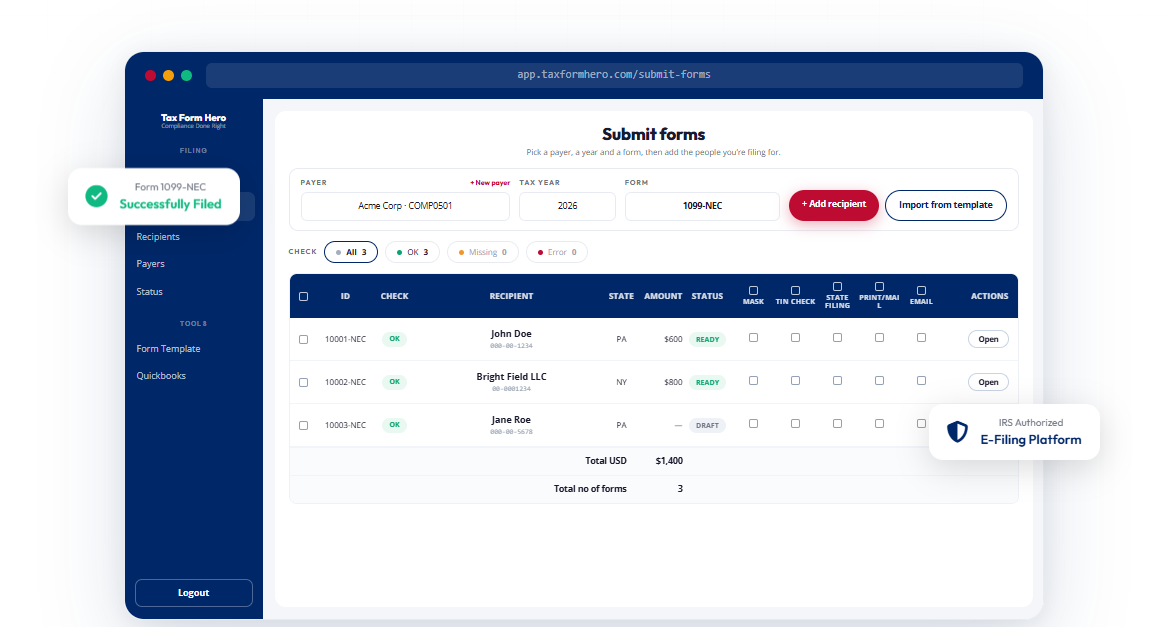
Electronic submission helps turn a complicated process into a trackable workflow. Instead of relying on manual packing and shipping, you can submit forms through an online file 1099 misc online system designed to support compliance requirements. This gives teams faster feedback loops, making it easier to correct problems before they become costly delays.
When you use an integrated platform, you can also reduce tool sprawl. Managing multiple spreadsheets, separate software utilities, and repeated data exports increases the risk of inconsistent results. An online platform can centralize the process for creating and submitting forms, so you maintain one source of truth from preparation to submission.
1099 online filing service
Conclusion
That’s especially valuable for accounting teams and professionals who need dependable results across many payees and document types. With taxformhero.com, businesses and professionals can manage required tax documents through a convenient submission workflow built for real-world use. The platform supports electronic submission of 1099 forms and more than 20 tax forms, helping simplify federal and state filing requirements from one place. If your current process feels fragmented, upgrading to a streamlined approach can be the difference between reactive cleanup and confident, organized filing.
